

Its 2025, and Web3 has become a tangible part of how people interact, transact, and build online. What once felt like a loosely defined dream of decentralization has matured into real-world utility. From DeFi platforms and NFT-driven experiences to blockchain-based gaming and community-governed ecosystems, Web3 is steadily reshaping the internet as we know it.
But where exactly do things stand today? How far have we come — and what does the data say about where we’re heading next? This article examines the current trajectory of Web3, the trends gaining traction, and the challenges still ahead as we move toward a more open and decentralized digital future.
Global and Regional Web3 Adoption Rates
How many people are using Web3 in 2025? In early 2025, over 560 million people, approximately 6.8% of the global population, own cryptocurrencies and use Web3 tools, reflecting a significant shift toward digital finance platforms.
The UAE leads adoption with 31%, followed by Singapore (24.4%), Turkey (19.3%), Argentina (18.9%), and Thailand (17.6%), rounding out the top five.
Notably, around 1.68 billion blockchain wallets have been created across chains, including both active and dormant accounts.
Top-performing regions
Emerging markets boast of the highest adoption rates. Nigeria (84%), South Africa (66%), Vietnam (60%), the Philippines (54%), and India (50%) report wallet ownership exceeding half their online populations. North America and Europe trail with wallet ownership at roughly 43–44%, led by the US and Turkey.
Growth comparison from 2023–2025
Web3 adoption stats from 2025 show Latin America experienced the fastest growth, posting a 116.5% increase in crypto ownership between 2023 and 2024, followed closely by Oceania at 114.3%. Meanwhile, in Q1 2025, global active Web3 engagement, measured by daily Unique Active Wallets (dUAW), reached 24.6 million, representing a slight 3% decline from the previous quarter. Most of this engagement came from gaming, social media, and DeFi use cases.
Which regions are emerging fastest and why?
Africa and Southeast Asia stand out as growth leaders. Thanks to mobile-first access, economic volatility, and a growing need for alternative financial services.
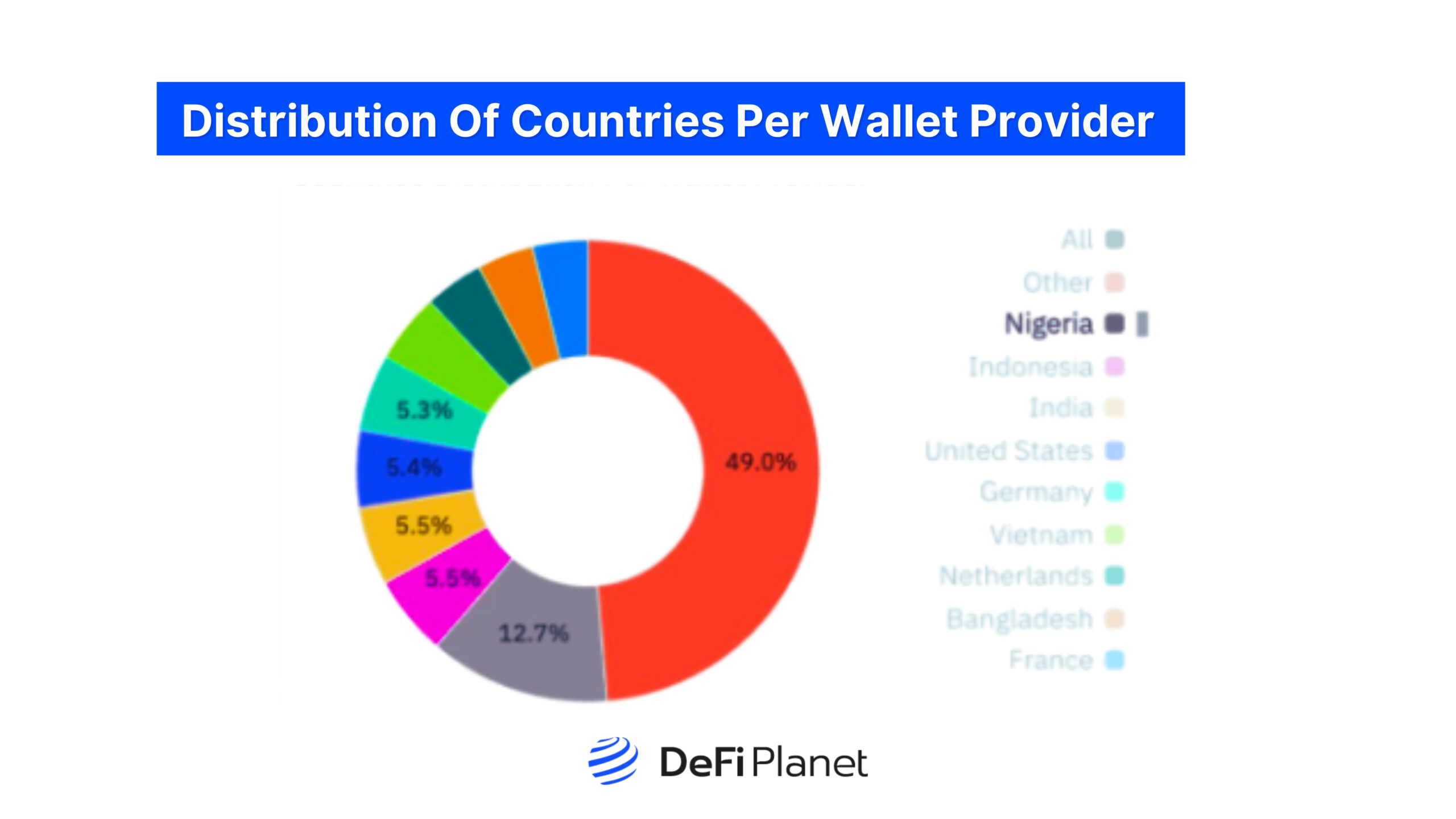
APAC saw a 311% rise in mobile wallet usage by 2025, while Africa recorded a 300% YoY increase in peer-to-peer crypto trading and boasts the highest 30-day retention among global regions. Nigeria alone accounts for 12.7% of all MetaMask users worldwide, a clear sign of rapid regional adoption.
Web3 Usage Metrics: Wallets, DAOs, dApps, and Active Users
Non‑custodial wallets remain a popular choice for users seeking greater control over their digital assets in 2025. But what are web3 wallets used for? They’re not just for holding tokens; they’re used to access dApps, join DAOs, trade in DeFi, and manage NFTs.
On the exchange front, Binance remains the world’s largest crypto exchange, surpassing 250 million registered users in January 2025.
Coinbase reports approximately 105 million users worldwide, with a robust presence in the US. Bitget Wallet also reached 12 million monthly active users in September 2024, and expanded its overall user base to over 60 million by year-end.
On many Layer 1 and Layer 2 networks, like Avalanche, Arbitrum, and Optimism, wallet numbers have tripled year-over-year, indicating both deeper adoption and ecosystem expansion.
DAO participation and governance activity levels
Decentralized Autonomous Organizations (DAO) are growing in organizational presence, though governance engagement remains varied. As of 2024, there were over 13,000 DAOs with a combined treasury value of $24.5 billion and 11 million governance token holders.
Usage trends in dApps
Decentralized apps (dApps) are expanding across different use cases in 2025. In Q1, Web3 gaming reached 5.8 million daily unique active wallets, marking a 6% decline from the previous quarter.
Overall, dApps attracted around 24 million daily unique active wallets, a 3% dip from the previous quarter. Meanwhile, NFTs and social dApps experienced a 6–9% rise in user engagement in early 2025, even as DeFi usage cooled slightly in certain market segments.
Rise in multi‑chain wallets and cross‑chain platforms
Web3 usage trends H1 2025 show that Multi‑chain and cross‑chain tools are surging. In 2025, non‑custodial wallets supporting multiple chains are estimated to serve over 50 million users globally.
Moreover, although only approximately 7% of wallet holders use dApps across multiple blockchains, projects like Arcana’s Chain Abstraction are simplifying cross‑chain experiences, enabling DeFi, gaming, and DAO use cases to bridge ecosystems more fluidly.
DeFi, NFTs, GameFi, and Social dApps
Is DeFi still growing in 2025? In Q1 2025, DeFi’s total value locked (TVL) dropped by about 27%, settling at around $156 billion following a peak of nearly $214 billion in late 2024. Ethereum remains the dominant chain, with approximately $61.396 billion in TVL. However, L2 and alternative blockchains, such as Solana, hold $2.287 billion, and Avalanche holds $1.429 billion. Notably, Berachain defied the trend and gained $5.17 billion in new TVL in early 2025.
DeFi User Retention and Protocol Leadership
User retention in DeFi remains mixed. In December 2024, major protocols like Aave and Lido boasted of large deposits, with Aave and Lido collectively holding almost $70 billion in net deposits.
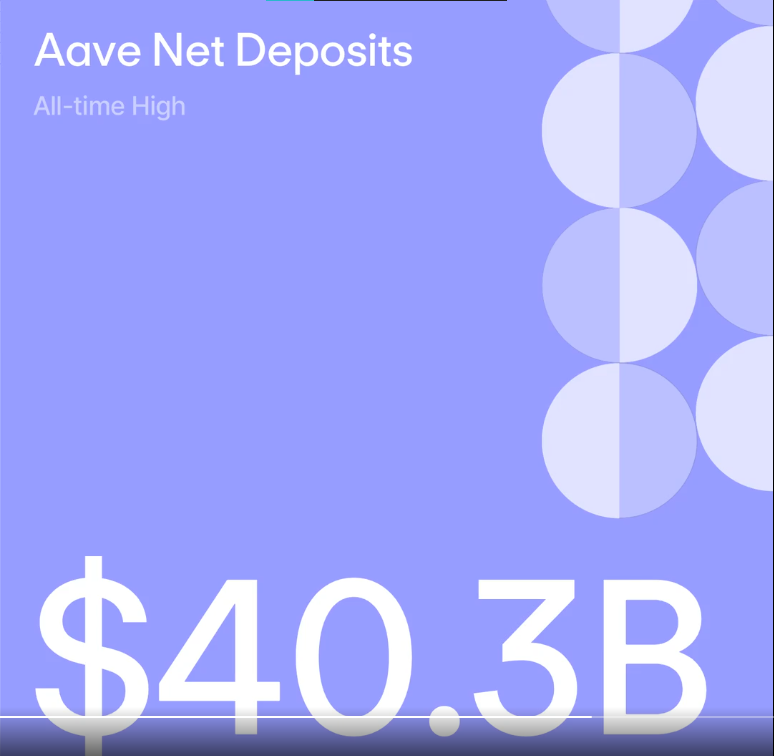
Aave leads with $34.3 billion in deposits, followed closely by Lido with $33.4 billion. Together, they represent a significant portion, approximately 45.5%, of the total deposits within the top 20 DeFi applications. By May 2025, Aave reached $40.3 billion in net deposits, the highest TVL ever reached by a DeFi protocol.
NFTs: Trading Volume and Emerging Use Cases
Non-Fungible Tokens (NFTs) trading saw a sharper dip in early 2025, falling 24% to $1.5 billion in Q1. Ethereum-based collections led sales, though overall buyer participation decreased. Still, innovation persisted: utility NFTs for ticketing, identity, and loyalty, such as LiveNation on Flow, are gaining real-world traction, signalling early signs of an NFT market recovery in 2025, with a focus on practical use cases.
GameFi: Daily Active Users & Regional Adoption
GameFi continues its surge. Daily active wallets exceeded 7.4 million by end-2024, up from about 1.5 million in early 2023. Q1 2025 saw over 1 million daily active users, a notable jump from just 63,000 in early 2021. Solana and Ronin are top platforms in this space, with Ronin alone hosting over 2.2 million daily users, a more than tenfold increase year-over-year.
Web3 Social: Platforms Gaining Traction
Web3 social apps saw a 10% increase in daily unique active wallets in Q1 2025, reaching 2.8 million. Decentralized social protocols like Mastodon and Mirror are gaining serious momentum, with millions in creator payouts. Reddit users cite Lens Protocol, Farcaster, and FriendTech as leading examples of composable social infrastructure built on Web3.
Enterprise & Brand Adoption
In the finance sector, Visa has launched token-based loyalty schemes that enable blockchain rewards and even stablecoin settlement on the Solana blockchain. Supply chain use cases have also gained traction. Companies like Coca-Cola and Reckitt are deploying blockchain for traceability via platforms like Diginex LUMEN to track ESG compliance.
In fashion, major luxury brands, including Gucci, Louis Vuitton, Balenciaga, and Hugo Boss, are embracing Web3 adoption in 2025 through NFTs for digital wearables, loyalty programs, and virtual activations on platforms like Roblox and Fortnite. Entertainment giants such as Starbucks (Odyssey program), Nike (.SWOOSH), and cinema chains like AMC are also using NFTs for loyalty and engagement, further illustrating which industries are adopting Web3 today.

High‑profile corporate integrations
Nike’s .SWOOSH platform (pronounced dot Swoosh) and acquisition of RTFKT delivered a playable Web3-native ecosystem with digital apparel, creator royalties, and virtual events.
In the metaverse, Adidas has dropped digital wearables in virtual spaces, and brands like Gucci, Hugo Boss, and Versace have launched branded experiences and AR/VR activations capitalizing on virtual fashion events.
Infrastructure Trends: Layer 1s, Layer 2s, and Tooling
Ethereum continues to dominate in terms of TVL and developer activity, holding around 63–65% of total Layer 1 TVL, equivalent to $55–65 billion, and generating the highest transaction and revenue figures. Solana grew rapidly in 2024–2025 and now ranks as the second-largest chain with a current market cap of $81.86 billion.
BNB Chain and Avalanche remain significant players, with BNB’s market cap at $92.31 billion and Avalanche at around $7.93 billion as of June 30 2025.
The Rise of Layer 2s
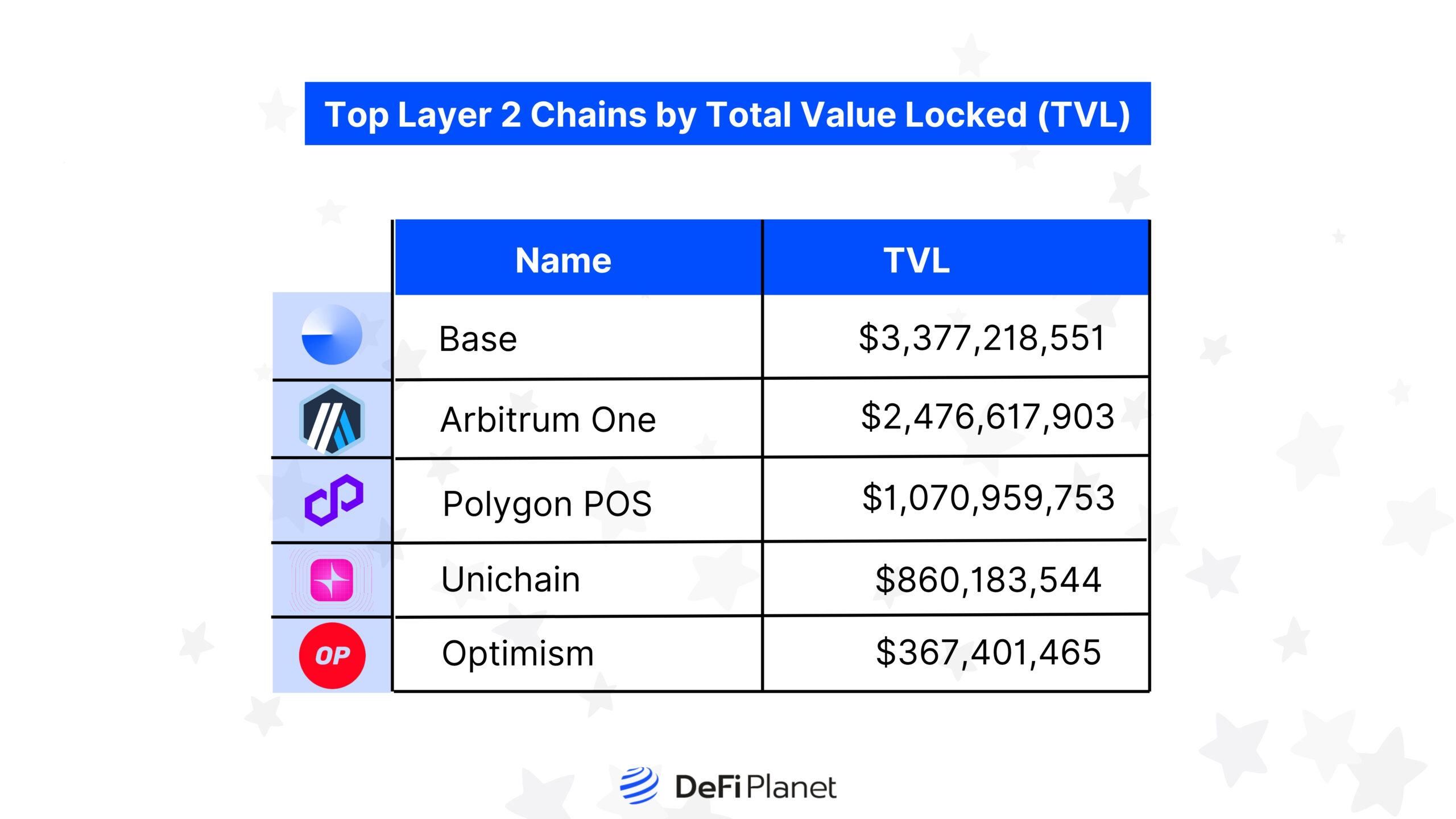
Layer 2 protocols on Ethereum have seen remarkable adoption. As of early 2025, L2 TVL totalled around $10.2 billion, with Base leading with over $3.3 billion, followed by Arbitrum One with over $2.4 billion, Polygon POS with over $1 billion, and Unichain and Optimism commanding hundreds of millions.
Academic studies show that these L2s now account for nearly half of Ethereum’s DEX volume, with some, like Base and Optimism, having over 50% of on-chain gas consumed by MEV activity, underscoring both adoption and competitiveness.
Developer activity and ecosystem funding
Ethereum leads in developer engagement, with 24,144 commits and around 1,572 developers, far exceeding other chains. In 2024, Layer 2 (L2) blockchain ecosystems received nearly 10% of all blockchain infrastructure funding. This growth is notable within the Bitcoin L2 space, where funding has reached $447 million, with 39% of that occurring in the first three quarters of the year.
Tools/platforms supporting easier Web3 dev (Alchemy, Moralis, Thirdweb)
While specific usage statistics are less publicly available, the Web3 developer environment has been enriched by platforms such as Alchemy, Moralis, and Thirdweb. These tools simplify authentication, smart contract deployment, API integration, and dApp frontend workflows, key enablers for scaling decentralized development efforts across L1 and L2 networks.
Regulatory Environment
In June 2025, the U.S. Senate passed the GENIUS Act to establish a federal framework for stablecoins, requiring full 1:1 reserve backing, regular audits, and federal or state regulatory oversight, with enforcement expected by Q3 2026. Alongside this move, other bills such as the STABLE Act aim to embed anti-money laundering (AML) rules under the Bank Secrecy Act.
EU (MiCA Rollout)
Europe’s Markets in Crypto-Assets Regulation (MiCA) entered full application by December 2024. It enforces strict rules on token issuers, stablecoins (such as ART and EMT), and crypto-service providers (CASPs), including licensing, disclosure, reserve standards, and AML/market abuse prevention measures.
As of early 2025, only a handful of entities are licensed under MiCA, but projections estimate licensing will reach over 100 CASPs by year’s end.
Asia (South Korea, Singapore, Japan)
South Korea is preparing to authorize spot crypto ETFs by late 2025 and is crafting laws for won-pegged stablecoins, piloted by commercial banks.
Singapore is tightening regulations under its Digital Token Service Provider scheme, requiring licensing by June 30, 2025, and banning offshore offerings without local compliance responsibilities around KYC and investor protections.
In Japan, the government continues its progressive approach by legally recognizing crypto assets, integrating stablecoin guidance, and supporting digital assets and Web3 innovation.
Africa and LATAM
Emerging markets across Africa and Latin America are moving ahead with licensing schemes for virtual asset service providers (VASPs). South Africa now treats crypto as a financial product subject to FSCA oversight, requiring AML compliance.
In Nigeria, while the central bank recently lifted its ban on crypto transactions, new guidelines from the Securities and Exchange Commission (SEC) are setting clearer rules for VASP registration and operations.
Panama has introduced a 2025 draft bill for crypto asset frameworks, while regions including the UAE and Bahrain are issuing VASP registrations.
VC Funding and Market Sentiment
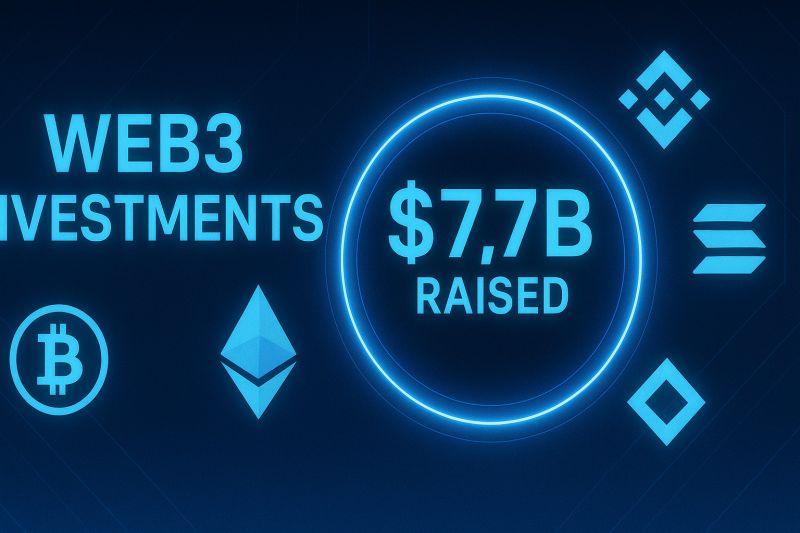
In H1 2025, Web3 startups secured approximately $7.7 billion in VC funding across roughly 603 deals, nearly matching the record quarter of Q4 2024.
However, about one-third fewer deals took place compared to late 2023, indicating a shift toward capital concentration in larger rounds.
Sector-wise funding breakdown: Infra, DeFi, gaming, social, AI × Web3
A significant share of funding favoured infrastructure and mature protocols. Q1 saw $2.5 billion poured into infrastructure, L1/L2 networks, and ecosystem treasury rounds, driven in part by a single $2 billion round into Binance.
DeFi protocols raised around $763 million, while gaming/Web3/NFT/metaverse projects slipped, accounting for only 4% of capital. Emerging interest in AI–Web3 convergence also began to attract dedicated funding.
Shift in investor priorities: from speculation to sustainability and utility
Investors are increasingly favouring mature, utility-driven projects, with later-stage rounds dominating (65% of capital in Q1). Seed rounds are smaller but more focused, aligning with deeper technical product-market fit.
Meanwhile, speculative funding, especially in gaming and NFTs, has declined sharply, partly due to market fatigue and critical reporting that questioned unsustainable capital flows.
What’s Next: Projections for H2 2025 and 2026
Non-custodial Web3 wallet adoption is expected to climb by another 20–30% in H2 2025, building on 2024’s momentum. DAO participation continues its surge, with total treasury values exceeding $40 billion in early 2025 and forecasted to grow as enterprises adopt modular, governance-native structures.
Meanwhile, traditional financial firms and large enterprises are projected to increase their footprint in Web3, particularly in tokenized securities, digital identity, and DeFi operations, signalling a maturation of institutional use across multiple sectors.
Future of modular blockchains and AI/Web3 convergence
Modular blockchains are poised for breakout growth in consumer-facing applications by 2026. Looking ahead, modular blockchain projections 2026 point to a shift toward specialized chains that split consensus, execution, and data layers.
Meanwhile, how does AI impact Web3? Projects are using on-chain machine learning for smart transactions, predictive pricing, and generative NFTs. AI integration is advancing rapidly; decentralized AI agents and smart contracts augmented with machine learning are projected to contribute as much as $20 trillion to global GDP by 2030.
Areas to watch: Identity, decentralized social, RWA tokenization
Decentralized identity systems (DIDs) are gaining traction, with pilots in several countries exploring on-chain credentials as legal ID tools. Web3 social platforms are also rising as users seek privacy-focused, token-governed spaces.
Meanwhile, real-world asset (RWA) tokenization, from real estate to art, is accelerating, with the market set for major growth in the next 18–24 months.
Final Takeaways
Web3 infrastructure is maturing, regulation is catching up, and user adoption is stabilizing. 2025 marks a turning point: not just for innovation, but for trust, scale, and everyday relevance. As the tools and networks behind Web3 become more accessible and secure, they’re shaping the blueprint for a more open, user-owned digital future.
Disclaimer: This article is intended solely for informational purposes and should not be considered trading or investment advice. Nothing herein should be construed as financial, legal, or tax advice. Trading or investing in cryptocurrencies carries a considerable risk of financial loss. Always conduct due diligence.
If you would like to read more articles like this, visit DeFi Planet and follow us on Twitter, LinkedIn, Facebook, Instagram, and CoinMarketCap Community.
Take control of your crypto portfolio with MARKETS PRO, DeFi Planet’s suite of analytics tools.”