

Public blockchains were sold as the future of finance and governance. But a fundamental tradeoff has become impossible to ignore: every transaction, including patient data, trading positions, and voter preferences, sooner or later becomes a permanent public record.
Healthcare developers can’t launch compliant dApps, fintech founders face impossible KYC/AML tradeoffs, and governance protocols leak exactly what they’re designed to protect. For regulated industries, transparent chains have become a dead end.
Here’s a full recap of the summit below:
As Tamara J.N. Haasen, President – Input Output, told TFN, “We’re now in an era where privacy is essential. So, identity and privacy are both essential for the rest of the world to come online… To get institutions on board, and retail, we have to level up the system to create privacy and selective disclosure, to create more regulated products in the market.”
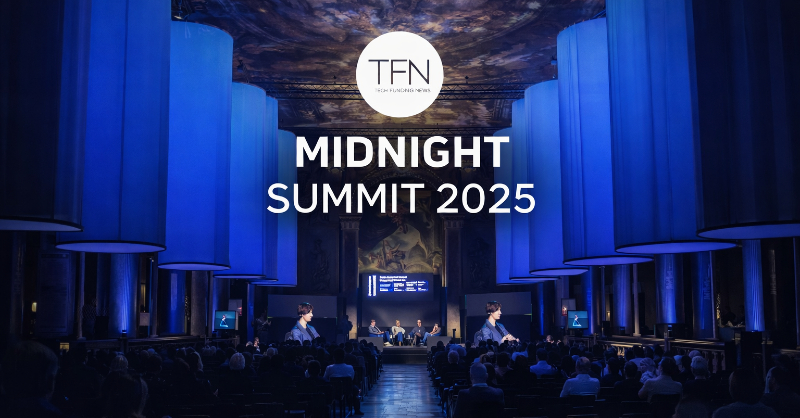
On November 15–16, 2025, at London’s Old Royal Naval College, Midnight held its inaugural summit, and Tech Funding News was on the ground to demonstrate that selective disclosure via zero-knowledge cryptography could finally bridge the privacy–compliance gap.
Nearly 450 builders, institutions, and Web3 thinkers attended across two days, with 120+ developers coding on-site on concrete use cases.
As Omer Husain, General Manager – Bitcoin Defi, Input Output, tells TFN, “I haven’t seen an ecosystem activated in such a dramatic way, even pre-launch… You’re bringing people together by giving them a receipt they can redeem and use in a real ecosystem. Midnight’s USP, which is bringing privacy and private smart contracts to the crypto space, is incredible”
Cypher Day: The privacy trilemma and regulatory reality
Cypher Day opened with three interlocking challenges: blockchain-level privacy, institutional adoption barriers, and the role of privacy in public infrastructure. Rather than abstract discussion, the agenda tackled concrete problems.
Fahmi Syed, President – Midnight Foundation, stressed the foundation’s broader mission: “The mission behind it all is to bring rational privacy to not only the Midnight network and midnight developers, but also to all of blockchain… whether you’re building on Bitcoin, Ethereum, Solana, you don’t have to leave your ecosystem behind to utilize our special programmable privacy.”
Charles Hoskinson CEO and Founder – Input Output (the company behind the Cardano blockchain and a co-founder of Ethereum) took the stage to answer the question everyone has been asking: “When Midnight?” Building on the opening keynote, he positioned Midnight as the fourth generation of blockchain: rational privacy as the missing capability every ecosystem needs.
Hoskinson highlighted Cooperative Economics shaping Midnight’s design: a network built to complement existing chains, enabling users to “use Midnight as if it’s a Layer 2 for everyone.” He then unveiled the roadmap organised around four Hawaiian moon phases (Hilo, Kūkolu, Mōhalu, and Hua), mapping the journey from token distribution to mainnet launch to a cooperative, privacy-first ecosystem delivering programmable privacy, hybrid DApps, and resilient infrastructure.
Long story short, Midnight addresses the privacy trilemma via zero-knowledge proofs and computation on encrypted data.
“One of my main roles is working with those partners to figure out, what is it that you need, what is it that we can provide, and how can I even match make you with other partners… now we have a new capability that Midnight is supporting, and the foundation is the matchmaker, in a way, right, bringing people to a table, and then they can do their business, and we’ll be as helpful as we can be, but get out of the way, you know, as they progress and turn this into a real operation,” Benjamin Beckman, Chief Technical Adviser, Midnight Foundation, explains to TFN.
Addressing the regulations head-on
Rather than theory, the summit prioritised tangible applications:
“Healing the Trust Gap: Privacy, Proof, and the Future of Health Data” brought together healthcare innovators and privacy technologists to address genomic research, electronic medical records, and consent management.
“Trust, Verify, Transact: Private Finance on Public Chains” directly addressed the fintech paradox: finance needs privacy, while regulators require auditability. Sessions included infrastructure providers, secondary market operators, and tokenisation rail builders, demonstrating how privacy-by-design can coexist with compliance.
“Compliant by Design: KYC/AML that Protects Privacy” showcased selective disclosure mechanisms that allow institutions to demonstrate regulatory compliance (e.g., full audit trails, sanctions screening) without exposing personally identifiable information. This was positioned as the bridge to institutional adoption.
“AI × Web3” explored emerging convergence with on-chain AI agents, featuring teams from OODA (decentralised AI architecture), DEGA (no-code agent builders), and Web3Fast (AI-driven smart contract generation).
Day two: 120+ live hackathons, ecosystem proof
While Day One debated principles, Day Two validated them with 120+ live hackathon demonstrations featuring working code across regulated verticals. The through‑line was developer experience. Haasen notes, “Privacy must feel like a familiar pattern, that’s how you get shipping teams.”
Each team emphasised the same observation: Midnight’s developer-friendly APIs abstract away the complexity of zero-knowledge proofs. Unlike earlier privacy protocols requiring cryptographic expertise, Midnight enables developers to build privacy-preserving applications using familiar patterns.
Syed framed the stakes: “The community will now be able to hold their NIGHT, see their unlock schedules, and prepare to meaningfully participate in a network that’s bringing essential privacy infrastructure to the entire industry.”
Midnight also tackles fees head‑on: NIGHT governs staking and consensus, while DUST continuously regenerates to reduce gas volatility, letting teams budget and scale privacy without premium costs. Panellists outlined where this goes next: “We see stablecoins evolving from payment rails to full Treasury applications: programmable stores of value with auditability.”
The bottom line: builder signal > token metrics
Amid the challenges, Syed expresses optimism: “I’m optimistic because I’m focused on what Midnight can do and what it can open up. Currently, though, in the market, it’s challenging… but challenges bring out new participants, new builders, and it takes courage and curiosity to keep pushing through these challenges. So I encourage everybody to be optimistic while they face these challenges…”
Midnight has crossed an important threshold, from research to developer‑backed infrastructure, at the exact moment regulatory pressure, technical maturity in ZK, and institutional need converge.
The real test arrives with mainnet in Q1 2026: the question shifts from “does this work?” to “will regulated institutions actually build on it?” The industry may be “chaotic,” but it’s “on the brink of the primitives it needs.”
The real test arrives with mainnet in Q1 2026: the question shifts from “does this work?” to “will regulated institutions actually build on it?” The industry may be “chaotic,” but it’s “on the brink of the primitives it needs.”