


With over 560 million users globally, cryptocurrency has captured significant attention. Yet, this impressive number represents less than 5% of the world’s population, highlighting its relatively niche status. However, if you ask any real crypto enthusiast, they will tell you that they look forward to the day when crypto replaces cash/fiat as we know it today.
Saifedean Ammous, author of The Bitcoin Standard, described Bitcoin as the natural next step in the evolution of finance.
But will crypto ever break free from its niche status to become a part of everyday life, or is it destined to remain the playground of tech enthusiasts, high-risk investors, and DeFi hobbyists?
Exploring this question is necessary because of the fundamental promise underpinning the technology powering it. There have to be very clear steps outlined for moving crypto from its current state into the everyday lives of billions so the merit of the argument and promise can be indeed seen and accepted.
The Current Landscape: Glimpses of a Crypto Revolution
To understand where cryptocurrency stands today, it helps to borrow from Nasdaq’s adoption curve theory, which suggests that technology grows slowly until it reaches a tipping point (8–10% adoption), after which it experiences rapid mass adoption.
Cryptocurrencies may be approaching this inflection point. There are already hints of a crypto revolution. According to the “Global Crypto Adoption Index” by Chainalysis, between late 2023 and early 2024, global crypto activity surged beyond the levels of the 2021 bull market.
Corporate and Institutional Adoption
Corporate buy-in has been a significant catalyst for cryptocurrency’s growth. Companies like MicroStrategy, Metaplanet, Semler Scientific, and Genuis Group hold Bitcoin in their reserves. Many others have announced plans to follow suit, signaling confidence in digital assets as a store of value. Similarly, institutional interest is rising. A 2023 Nomura investor survey revealed that allocators expect to invest 5–10% of their portfolios in digital assets within three years.
The approval of Bitcoin ETFs in the U.S. has further legitimized crypto, paving the way for broader adoption in traditional financial markets, particularly through institutional-sized transfers in North America and Western Europe.
Shifting Government and Political Dynamics
Governments are also experimenting with cryptocurrencies, albeit cautiously. El Salvador made headlines when it adopted Bitcoin as a legal tender. While most are not making such a daring choice, many are already considering adding cryptocurrency to their national asset reserves, just like corporate entities. There are reports of proposals from major stakeholders worldwide, from the big players in the global economy like Germany, Russia, the European Union, and the United States to the relatively small players like the Czech Republic and Poland.
Also, the recent wave of tax laws aimed at cryptocurrency indicates that these governments are finally recognizing the legitimacy of this financial asset.
RELATED: Are Crypto Taxes a Sustainable Source of Government Revenue?
Tools for Everyday Use
Mainstream financial tools and platforms are integrating crypto, making it more accessible for everyday use. PayPal’s crypto features and stablecoins’ utility for remittances in regions like Sub-Saharan Africa and Latin America demonstrate crypto’s practical applications.
Stablecoins, in particular, have proven to be a lifeline for underserved populations, enabling affordable transactions and financial inclusion. Residents of lower-middle-income countries are also driving adoption, using them for remittances and as an alternative to traditional banking systems. For example, the launch of stablecoin-backed payment networks in places like Kenya has significantly lowered the cost of cross-border remittances, a key use case for crypto.
High-income nations are also seeing adoption, albeit at a slower pace. Institutional-sized transfers have grown in regions like North America and Western Europe, spurred by events like the launch of Bitcoin ETFs. However, adoption in these regions is more tied to speculative investments and portfolio diversification than practical use cases.
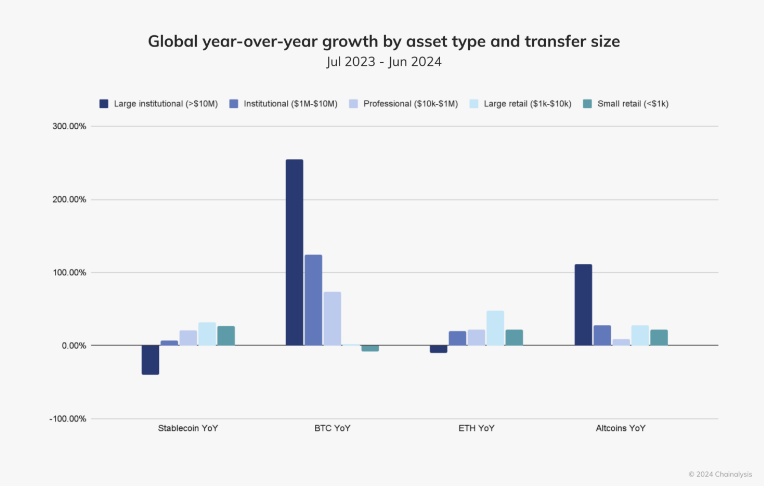
Crypto debit cards and crypto ATMs are other interesting ways that are being explored with measured success to demonstrate crypto’s utility for daily transactions.
READ MORE: Crypto ATMs: Have they been Effective as Promised?
Challenges to Mass Adoption
Despite these strides, cryptocurrency’s journey to mass adoption faces significant barriers. These challenges must be addressed to unlock crypto’s full potential.
Regulatory Uncertainty
A lack of consistent and globally coordinated regulations creates confusion for users and investors. Unclear classifications—whether crypto is a security, utility token, or currency—further complicate adoption. Regulatory clarity is critical to building trust and ensuring mass adoption.
Usability and Complexity
Crypto remains intimidating for the average user. Managing private keys, understanding wallet addresses, and navigating complex KYC/AML processes create a steep learning curve. Until user-friendly solutions become widespread, crypto risks alienating mainstream users.
For instance, platforms like Coinbase and Gemini have worked to make crypto trading more user-friendly, but many still struggle with understanding wallet management, security, and blockchain operations.
Scalability and Transaction Efficiency
Scalability remains a critical issue. While Visa processes over 24,000 transactions per second (TPS), Bitcoin handles about 7 TPS, and Ethereum manages around 15 TPS. These limitations, coupled with high transaction fees, make crypto impractical for daily use. Layer-2 solutions like the Lightning Network offer hope but are not yet mainstream.
Market Saturation and Interoperability Challenges
The crypto ecosystem is oversaturated with thousands of tokens, each claiming to solve unique problems. This abundance overwhelms users, while the lack of interoperability between blockchains undermines crypto’s promise of seamless, borderless transactions.
Projects like Polkadot and Cosmos are attempting to solve the issue of blockchain interoperability, which could play a key role in unifying the crypto ecosystem.
Volatility and Lack of Stability
Cryptocurrency’s notorious price volatility makes it unreliable as a medium of exchange. Imagine buying coffee with Bitcoin, only to find that the price you paid would have been significantly cheaper—or more expensive—the next day. Stability is critical for broader use, especially for day-to-day transactions.
Scams and Security Concerns
Despite blockchain’s inherent security, the broader crypto ecosystem has been plagued by hacks and scams. High-profile hacks, like the $305 million breach of DMM Bitcoin in May 2024, erode public trust. Chainalysis reports a 21% year-over-year increase in stolen funds in 2024, totalling $2.2 billion.
Between 2021 and 2023, decentralized finance (DeFi) platforms were particularly susceptible to hacks, consistently ranking as the primary targets. These attacks often exploited weaknesses in smart contracts or platform security, highlighting the urgent need for stronger safeguards across the crypto landscape.
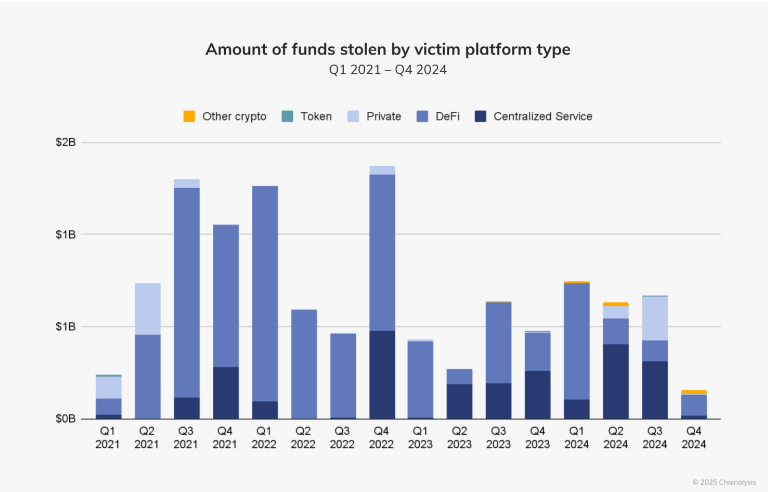
Each breach not only causes financial loss but also erodes user confidence, reinforcing the perception that the crypto industry remains risky and unregulated. Until there are clear safeguards and insurance policies in place, potential users will remain sceptical.
Is Mass Adoption of Cryptocurrency Achievable?
The barriers are formidable, but they are not insurmountable. Advances in technology, such as Layer-2 solutions and blockchain interoperability, can address scalability and usability challenges. Regulatory clarity and education initiatives can help build trust and expand the user base.
Furthermore, stablecoins and real-world applications, particularly in underserved regions, demonstrate crypto’s potential as a functional financial tool rather than a speculative asset. The combination of grassroots adoption, institutional participation, and technological innovation suggests that mass adoption is not a question of if but when.
The crypto ecosystem is at a pivotal moment—one where continued innovation and collaboration could determine whether it becomes the cornerstone of a new financial era or remains a niche market. While the timeline is uncertain, the direction is clear: cryptocurrency is on a path toward transforming how the world transacts, saves, and invests.
Disclaimer: This piece is intended solely for informational purposes and should not be considered trading or investment advice. Nothing herein should be construed as financial, legal, or tax advice. Trading or investing in cryptocurrencies carries a considerable risk of financial loss. Always conduct due diligence.
If you would like to read more articles like this, visit DeFi Planet and follow us on Twitter, LinkedIn, Facebook, Instagram, and CoinMarketCap Community.
Take control of your crypto portfolio with MARKETS PRO, DeFi Planet’s suite of analytics tools.”