


Cryptocurrency exchanges play a crucial role in the digital asset market, allowing traders to buy and sell crypto seamlessly. At the core of every exchange is an order book, a fundamental tool that records all buy and sell orders in real-time.
Understanding how a crypto order book works can give traders an edge in the fast-moving market. This article will break down its structure, functionality, and significance, helping both beginners and experienced traders make informed decisions.
What is a Crypto Order Book?
A crypto order book is like a digital marketplace that keeps track of all the buy and sell orders for a cryptocurrency on an exchange. It’s what makes trading smooth, helping match buyers and sellers efficiently.
How It Works
The crypto order book organizes orders into two main groups:
Buy Orders (Bids): These are offers from traders who want to buy a cryptocurrency at a certain price.
Sell Orders (Asks): These are offers from traders looking to sell their cryptocurrency at a specific price.
Every order placed on a cryptocurrency exchange includes three key details:
- Price: The amount someone is willing to pay (buy) or accept (sell).
- Amount: How much of the asset is being bought or sold.
- Order Type:
- A limit order sets a specific price the trader wants.
- A market order buys or sells at the current best price available.
At the top of the order book, you’ll see:
- The highest bid price (the most someone is willing to pay).
- The lowest ask price (the least someone is willing to sell for).
These two numbers define the market price at that moment.
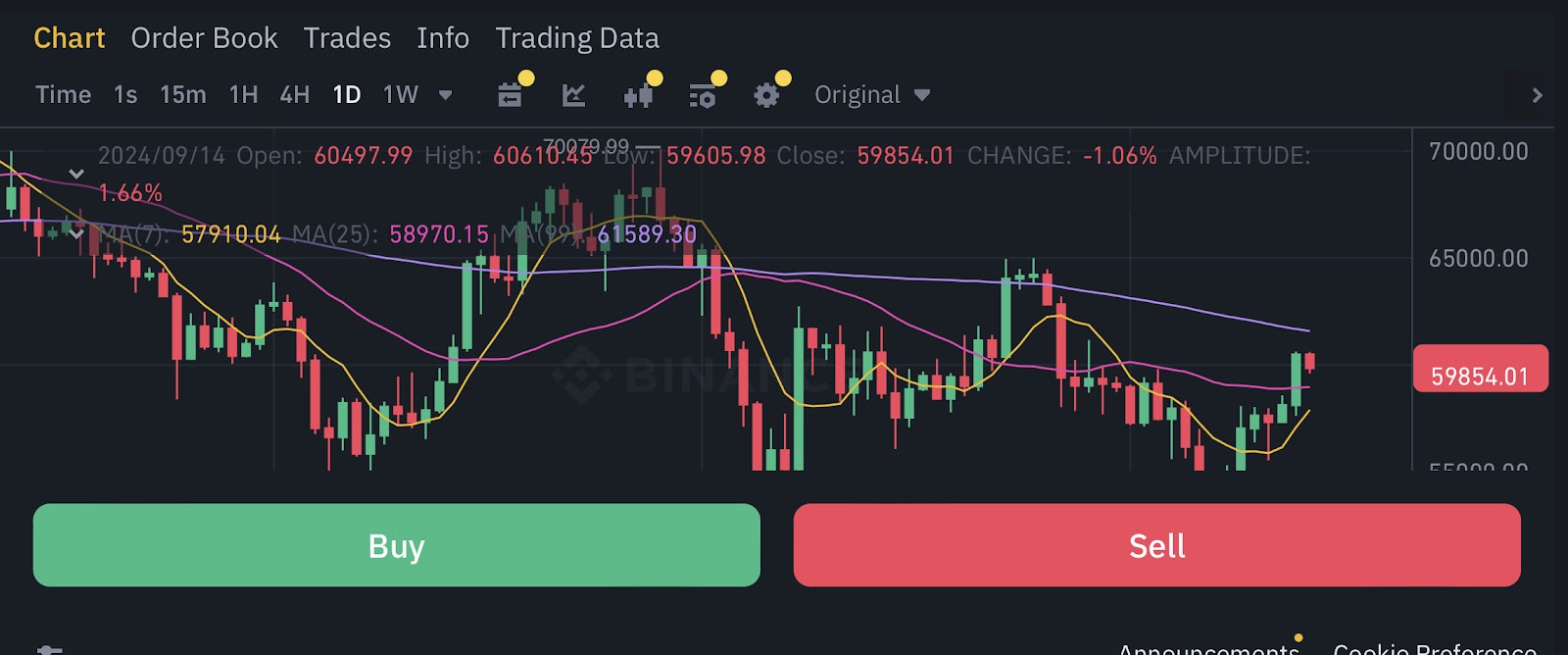
Most cryptocurrency exchanges show the order book next to a candlestick chart, helping traders analyze both current prices and past trends. By watching the order book, traders can:
- Spot Big Players: Are hedge funds or retail traders driving the market?
- Identify Buy/Sell Pressure: Prices might go up if there are way more buy orders than sell orders.
- Find Support & Resistance Levels: Large buy orders at a price level can act as a price floor (support), while lots of sell orders at a higher price can act as a ceiling (resistance).
Let’s say you notice a big cluster of buy orders at $40,000 for Bitcoin. This means many traders think BTC is worth at least that much, making it a likely support level. On the other hand, if there are tons of sell orders at $42,000, that could act as resistance, meaning it may be tough for BTC to break past that level.
Understanding the crypto order book can give you a trading edge, helping you anticipate price movements before they happen!
Crypto Order Books vs. Stock Market Order Books
Both crypto and traditional stock markets use order books, but there are key differences:
Crypto Order Books vs. Stock Market Order Books
Feature |
Crypto Order Book |
Stock Market Order Book |
| Market Availability | 24/7 trading | Limited trading hours |
| Asset Types | Digital assets (Bitcoin, Ethereum, etc.) | Stocks, ETFs, bonds |
| Market Makers | Decentralized and centralized market makers | Regulated financial institutions |
| Trading Speed | Near-instant transactions | Can involve clearing and settlement delays |
| Transparency | High (visible buy/sell orders) | May have institutional orders (dark pools) |
The crypto order book provides transparency and continuous trading, making it a dynamic and essential tool for traders navigating digital markets.
Types of Orders in a Crypto Order Book
When trading cryptocurrencies, different types of orders allow traders to control how and when their trades are executed. Understanding these order types is essential for effective trading strategies.
Types of Orders in a Crypto Order Book
- Market Orders (Executed Immediately at the Best Available Price)
- Limit Orders (Executed Only at a Specified Price or Better)
- Stop Orders (Activated When a Specific Price is Reached)
- Advanced Order Types (For More Complex Trading Strategies)
1. Market Orders (Executed Immediately at the Best Available Price)
A market order is executed instantly at the best available price in the order book. This type of order is commonly used when speed is prioritized over price control.
If a trader wants to purchase Bitcoin immediately, a market order will buy at the lowest available sell price in the order book.
Advantages:
- Ensures quick execution.
- Suitable for highly liquid markets.
Disadvantages:
- The final execution price may be higher or lower than expected, especially in volatile markets.
2. Limit Orders (Executed Only at a Specified Price or Better)
A limit order allows traders to specify the exact price at which they are willing to buy or sell an asset. The order will only be executed if the market reaches the designated price.
A trader who wants to buy Bitcoin at $38,000 can set a limit order. The order will be executed automatically if the price drops to that amount.
Advantages:
- Provides control over the execution price.
- Helps avoid unexpected price fluctuations.
Disadvantages:
- The order may not be executed if the market does not reach the specified price.
3. Stop Orders (Activated When a Specific Price is Reached)
A stop order remains inactive until the market reaches a predetermined price, at which point it becomes a market or limit order. These orders are often used for risk management.
A trader holding Bitcoin at $40,000 may place a stop-loss order at $38,000 to limit potential losses. If the price drops to $38,000, the order will automatically sell at the best available price.
Advantages:
- Helps minimize losses by triggering automatic trades.
- Can be used to enter trades at strategic price points.
Disadvantages:
- Prices may change rapidly, leading to execution at an unfavourable rate.
4. Advanced Order Types (For More Complex Trading Strategies)
Some cryptocurrency exchanges offer additional order types designed for more sophisticated trading strategies:
- Stop-Limit Order: Combines a stop and limit order. Once the stop price is reached, a limit order is placed instead of a market order.
- Iceberg Order: Large orders are split into smaller portions to avoid influencing the market price.
- Fill or Kill (FOK): The order must be fully executed immediately or cancelled entirely.
Understanding these order types enables traders to execute more effective strategies and make informed decisions in the crypto market.
The Role of Liquidity in an Order Book
Liquidity is one of the most important factors in how well an order book functions. It affects how quickly trades are completed, how stable prices remain, and whether traders can buy or sell without unexpected price changes.
Liquidity refers to how easily you can buy or sell an asset without causing a major price change. A market with high liquidity has plenty of buyers and sellers, making it easy to trade at predictable prices.
Strong liquidity is indicated by high trading volume, a deep order book with plenty of buy and sell orders, and a small bid-ask spread. The better the liquidity, the smoother and more efficient the trading is.
In a highly liquid market, traders experience minimal slippage, meaning they get prices close to what they expect. It also ensures fast order execution and helps prevent large price swings.
-
Impact of Liquidity on Order Execution
Liquidity plays a key role in how efficiently orders are filled.
In a high-liquidity market, orders are filled quickly with minimal price changes, so a trader typically gets the expected price. In a low-liquidity market, there may not be enough buy or sell orders, leading to delays and price fluctuations, known as slippage.
For example, if you place a market buy order for $10,000 worth of Bitcoin in a high-liquidity market, it will likely be filled at the expected price. In a low-liquidity market, however, your order might push the price up due to a lack of sellers at the current level, resulting in a higher-than-expected price.
-
Market Makers vs. Market Takers
Liquidity is maintained by two key groups: market makers and market takers.
Market makers add buy and sell orders to the order book, helping stabilize prices and maintain liquidity. For example, they might place a sell order for Bitcoin at $40,200 and a buy order at $39,800, profiting from the bid-ask spread.
Market takers place orders that execute immediately, removing liquidity. If a trader places a market order to buy Bitcoin, they take the lowest available sell price. Large market orders can drain liquidity and cause price swings, especially in low-volume markets.
How Order Books Influence Crypto Prices
Order books play a critical role in determining cryptocurrency prices. Understanding how order books function can give traders an edge in navigating the crypto market.
-
Price Discovery Mechanism
A cryptocurrency’s price is determined by the interaction of buy and sell orders in the order book. Buyers place bids at their highest price, while sellers set asks at their lowest. When they agree, a trade occurs, setting the latest market price. This process is called price discovery.
For example, if Bitcoin’s highest bid is $40,100 and the lowest bid is $40,200, the next trade will happen between these prices, depending on which side adjusts first. A more active order book leads to more efficient price discovery, ensuring prices reflect real supply and demand.
-
Spread and Market Volatility
The bid-ask spread is the gap between the highest bid and the lowest ask price. A small spread signals high liquidity and stability, while a large spread suggests lower liquidity and potential volatility. In low-liquidity markets, even small trades can trigger sharp price swings. During high volatility, order books become unbalanced, and traders monitor these shifts to anticipate price movements.
Some traders manipulate digital asset prices by exploiting the crypto order book. Two common tactics are spoofing and wash trading.
- Spoofing involves placing large fake buy or sell orders to create a false sense of demand or supply. Once traders react, the orders are cancelled, allowing the spoofer to profit from the price shift.
- Wash trading artificially inflates trading volume by buying and selling the same asset between accounts controlled by the same entity. This misleads traders into believing an asset has high demand.
While regulators and cryptocurrency exchanges try to prevent these practices, they remain common due to crypto’s decentralized and loosely regulated nature.
Final Thoughts
Understanding the crypto order book is essential for smarter trading. By examining the interactions between buy and sell orders, you can gain valuable insights into market sentiment, potential price movements, and liquidity. This allows you to make more informed decisions, minimize risks, and take advantage of opportunities as they arise.
While the order book provides powerful tools for understanding the market, becoming proficient in reading and interpreting it takes practice. By regularly analyzing order book data, experimenting with different strategies, and staying updated on market trends, you’ll be better equipped to navigate the fast-paced world of cryptocurrency trading.
The more you practice using order books, the sharper your trading strategies will become. Keep learning, stay engaged with the market, and leverage the order book to enhance your crypto trading success.
Disclaimer: This article is intended solely for informational purposes and should not be considered trading or investment advice. Nothing herein should be construed as financial, legal, or tax advice. Trading or investing in cryptocurrencies carries a considerable risk of financial loss. Always conduct due diligence.
If you would like to read more articles like this, visit DeFi Planet and follow us on Twitter, LinkedIn, Facebook, Instagram, and CoinMarketCap Community.
Take control of your crypto portfolio with MARKETS PRO, DeFi Planet’s suite of analytics tools.”