


Cryptocurrency was born out of a desire for financial freedom, a way to break free from the grip of centralized institutions, unchecked surveillance, and economic exclusion. Bitcoin’s whitepaper emerged during the 2008 financial crisis, offering an alternative to systems that had failed millions. It was a tool for empowerment, especially in regions where traditional financial access is a luxury, not a given.
Fast forward to 2025, much of the crypto space seems to have drifted from its roots. The spotlight now shines on institutional ETFs, corporate partnerships, and speculative memecoins. Powerful actors are shaping blockchain priorities, and users are more focused on yield farming and trading than protecting civil liberties.
This raises a difficult but urgent question: Has the crypto industry forgotten its original mission? And more importantly, can it reclaim its role as a defender of human rights before it’s too late?
The Core Human Rights Crypto Can Defend
At its heart, crypto isn’t just about technology or profit; it’s about protecting basic freedoms in an increasingly digital world.
Privacy: Freedom from Surveillance and Data Exploitation
In traditional finance and tech, every click, purchase, and transfer is tracked, often sold to advertisers or handed to authorities. Blockchain networks like Monero and privacy-preserving tools were built on Ethereum to shield users from unwanted surveillance.
This matters most in countries where speaking out or sending money to the wrong person could lead to harassment or arrest. Crypto gives individuals a way to transact without handing over their entire digital identity.
Self-Custody Matters
The right to control your own assets is central to crypto’s ethos. With self-custody wallets like MetaMask or hardware wallets such as Ledger, users can store funds without relying on banks or centralized exchanges. This is critical in regions where financial institutions can freeze accounts for political reasons, or simply fail due to corruption or instability.
In Iran and Myanmar, activists have used crypto to bypass government restrictions on fundraising and speech. Self-custody puts economic power directly into people’s hands.
Censorship Resistance: Empowering Speech and Transactions Without Gatekeepers
Traditional platforms can shut down accounts, block donations, or censor speech at the flip of a switch. Blockchain-based tools, especially decentralized social media and crypto payments, offer alternatives. During the Canadian trucker protests in 2022 and protests in Nigeria, authorities attempted to freeze funds, but crypto became a lifeline that couldn’t be easily silenced.
Financial Autonomy: Access to Value Without Relying on Banks or Governments
For billions of people around the world, banking access is limited or controlled by corrupt or unstable regimes. Crypto gives people a way to store and transfer value, even if their national currency is collapsing due to hyperinflation.
In Lebanon and Argentina, it has served as a hedge against runaway inflation. Venezuelan citizens turned to Bitcoin and stablecoins like USDT to survive economic chaos and protect their savings.
Where Crypto Is Falling Short
While crypto promised liberation from centralized systems, parts of the industry are increasingly mirroring the very institutions it was meant to disrupt.
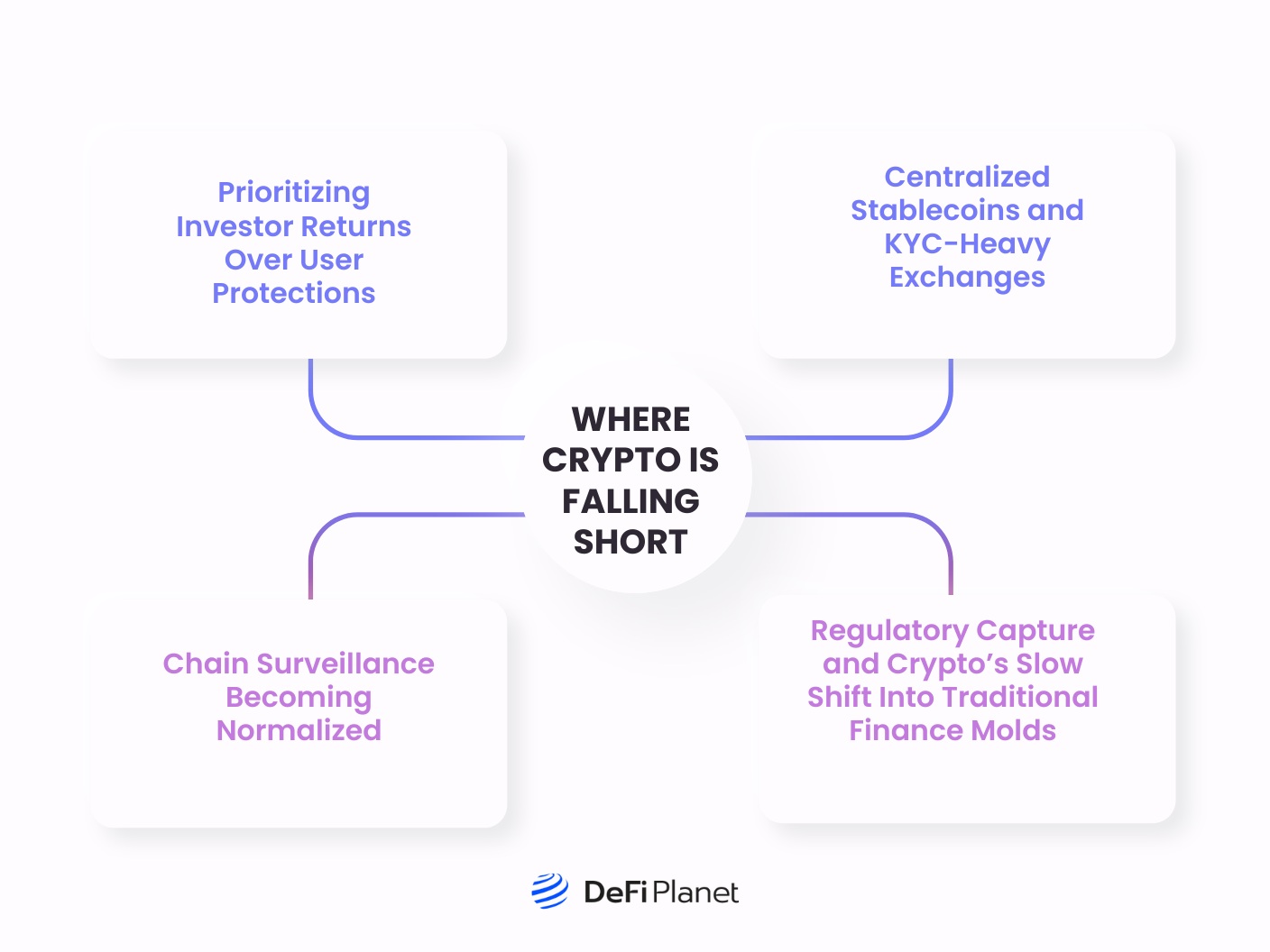
Prioritizing Investor Returns Over User Protections
Many crypto projects today are built around token price speculation rather than user empowerment. Founders and VCs often focus on fast profits, token launches, and hype cycles, while neglecting product usability, security, or ethical concerns.
As a result, scams and poorly audited protocols persist, leaving everyday users exposed to loss while insiders cash out early.
Centralized Stablecoins and KYC-Heavy Exchanges
Stablecoins like USDC and platforms like Binance or Coinbase play a crucial role in adoption, but their growing centralization undermines the values of decentralization and user financial autonomy.
These platforms can freeze funds, reverse transactions, and require extensive KYC that excludes vulnerable populations. In trying to appear “legitimate” to regulators, they risk replicating the very financial discrimination that crypto aimed to solve.
Chain Surveillance Becoming Normalized
Companies like Chainalysis and TRM Labs have turned blockchain transparency into a business model, offering forensic tools that governments and exchanges use to monitor transactions.
While this helps fight crime, it also creates an environment where privacy is treated as suspicious. Every day users now face blacklisted wallets and flagged transactions, making crypto feel less like a freedom tool and more like another monitored system.
Regulatory Capture and Crypto’s Slow Shift Into Traditional Finance Moulds
As crypto companies seek mainstream legitimacy, they are increasingly partnering with banks, lobbying governments, and designing platforms that comply with the rules of traditional finance.
This “institutionalization” process may boost adoption, but it also risks gutting the disruptive, rights-based foundations of crypto. When innovation bends too far to appease regulators and institutional investors, it can leave behind the very users it was supposed to serve.
Why Treating Rights as “Extras” Is Dangerous
When core human rights like privacy, financial autonomy, and censorship resistance are sidelined, crypto loses its power as a tool for freedom and becomes just another corporate product.
Without Privacy, Crypto Becomes Another Fintech App
If user privacy isn’t protected, blockchain-based services are no different from traditional finance apps that track spending and sell data. Crypto wallets can be traced, transactions deanonymized, and user identities exposed through analytics tools and KYC requirements.
Without robust privacy features, users risk being profiled, blacklisted, or worse, especially in repressive regimes where financial activity is monitored.
Without Censorship Resistance, Dissidents Are Silenced
One of crypto’s most vital promises is enabling free expression, financial and otherwise. If governments or corporations can freeze addresses, block transactions, or delist politically inconvenient content, then crypto ceases to be a safe haven for activists, journalists, and marginalized voices.
Censorship resistance isn’t just technical; it’s a lifeline for people trying to speak or act freely under oppressive systems.
Without Autonomy, Vulnerable Populations Are Left Behind
Millions around the world lack access to banks, stable currencies, or reliable legal systems. Crypto can provide direct control over money, bypassing corrupt intermediaries and weak institutions.
But when platforms demand passports, social security numbers, or expensive devices, they exclude the very people crypto was meant to empower. True financial autonomy means designing systems that prioritize inclusion over regulation.
When the U.S. sanctioned Tornado Cash, a privacy tool used by both bad actors and ordinary citizens, it sent a shockwave through the crypto world. Developers were arrested, GitHub repos were taken down, and contributors feared legal consequences.
The message was clear: building privacy-preserving tools might cost you your freedom. This sets a dangerous precedent that could stifle innovation and silence developers working on tools that protect human rights.
Projects That Prioritize Human Rights
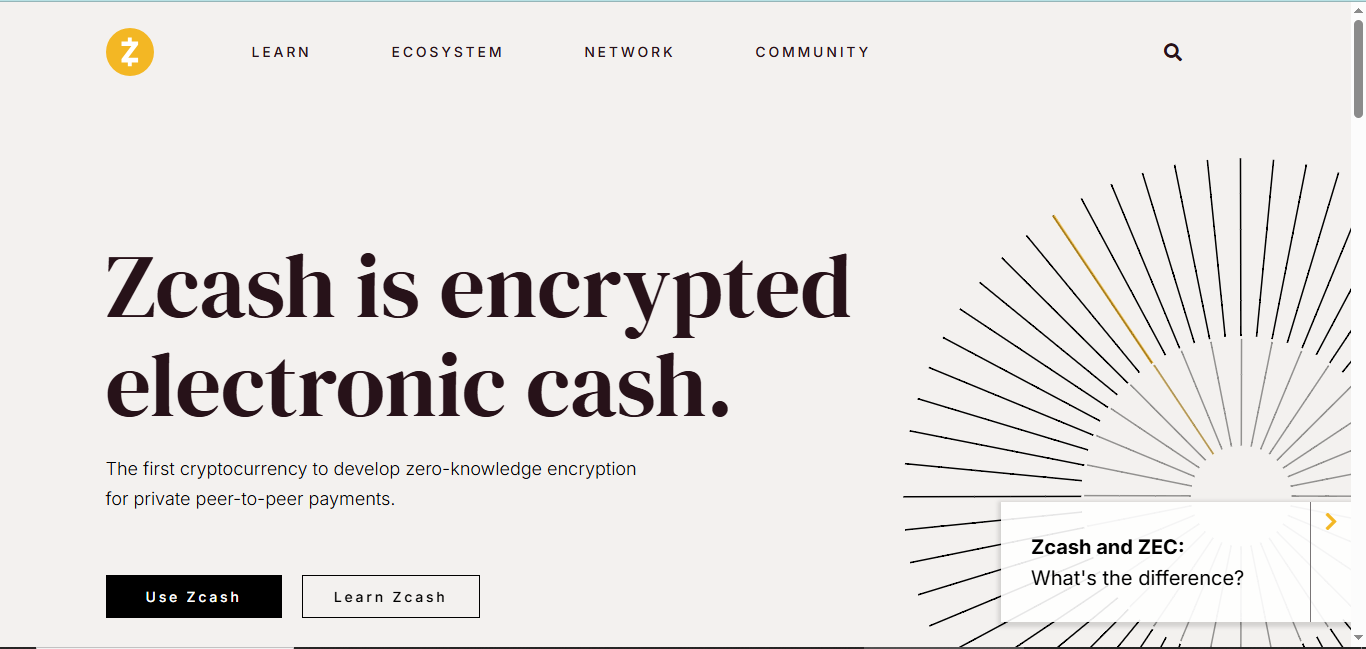
Projects like Monero and Zcash have made privacy their core mission, using advanced cryptography to shield users’ transaction data from surveillance. Nym, a decentralized privacy infrastructure, adds network-layer protection to block metadata leaks.
Ethereum’s zk-rollups (like zkSync and Scroll) are bringing zero-knowledge proofs to the mainstream, enabling private verification of activity without exposing user details.
Decentralized Governance as a Tool for Inclusion
Decentralized Autonomous Organizations (DAOs) offer new models of global cooperation where participants can vote, propose changes, and govern protocols without borders or gatekeepers.
Platforms like Gitcoin, Aragon, and Optimism’s RetroPGF highlight how governance can be transparent and community-driven, empowering users from underrepresented regions to shape the future of their digital economies.
Wallets, Bridges, and Platforms Built for Accessibility
Tools like MetaMask, Rabby Wallet, and Rainbow are improving security while keeping user experience simple, helping onboard people with limited technical backgrounds. Bridges and Layer-2 platforms like Polygon and Across Protocol aim to lower fees and make cross-chain movement safer and more affordable.
Grassroots Crypto for Survival in Oppressive Regimes
In regions like Venezuela, Myanmar, and parts of Sub-Saharan Africa, grassroots crypto efforts are making a real-world difference. Activist groups and humanitarian orgs are leveraging Bitcoin and stablecoins to bypass censorship, store value, and support families during internet blackouts or currency collapses.
Tools like BTCPay Server and Machankura (a Bitcoin wallet over SMS) demonstrate how open-source tech can empower those most marginalized by traditional systems.
Building a Rights-First Future in Crypto
Privacy and decentralization must be treated as foundational design principles, not afterthoughts. Developers can prioritize these by avoiding unnecessary data collection, using encryption by default, and minimizing reliance on centralized infrastructure.
For instance, designing wallets with local key storage, defaulting to privacy-preserving transactions, and enabling permissionless access ensures users retain control.
Values-Aligned Funding Models
The current VC-dominated funding model often pressures teams to prioritize scalability and profit over ethics and accessibility. To counter this, values-aligned funding, such as public goods grants, community DAOs, and quadratic funding models, can support projects that may not be instantly profitable but serve real-world needs.
Open Standards and Resistance to Overregulation
Open-source protocols, transparent governance, and interoperability standards are vital for defending crypto’s integrity. The community must also push back against overreaching regulations that erode privacy or ban neutral tools like mixers and decentralized exchanges.
Partnering With Human Rights Organizations
Collaboration between crypto builders and human rights groups is essential. Organizations like Access Now, EFF, and The Human Rights Foundation have deep expertise in digital repression, free speech, and authoritarianism. With these, crypto developers can ensure that the tools serve people, especially those most vulnerable to abuse.
Final Thoughts
Crypto is often described as “just technology,” but no technology is neutral. It reflects the intentions, assumptions, and priorities of its creators. If builders don’t consciously embed human rights into their code, platforms, and governance, then those rights will be sidelined, often in favour of profit, compliance, or convenience.
At its best, crypto is a lifeline for people living under oppressive regimes, suffering from hyperinflation, or shut out of traditional banking. But if the industry continues down a path of regulatory appeasement, centralized control, and surveillance normalization, it risks becoming another tool of control, indistinguishable from the systems it was meant to replace.
Human rights must not be treated as optional or secondary features. They are the foundation. This is a call to everyone in the crypto community: developers, investors, users, and advocates, choose to build for people, not just markets. If we don’t center freedom now, we may not get a second chance.
Disclaimer: This article is intended solely for informational purposes and should not be considered trading or investment advice. Nothing herein should be construed as financial, legal, or tax advice. Trading or investing in cryptocurrencies carries a considerable risk of financial loss. Always conduct due diligence.
If you would like to read more articles like this, visit DeFi Planet and follow us on Twitter, LinkedIn, Facebook, Instagram, and CoinMarketCap Community.
Take control of your crypto portfolio with MARKETS PRO, DeFi Planet’s suite of analytics tools.”